4 Ways to Check If Your Baby's Flat Head is a Problem
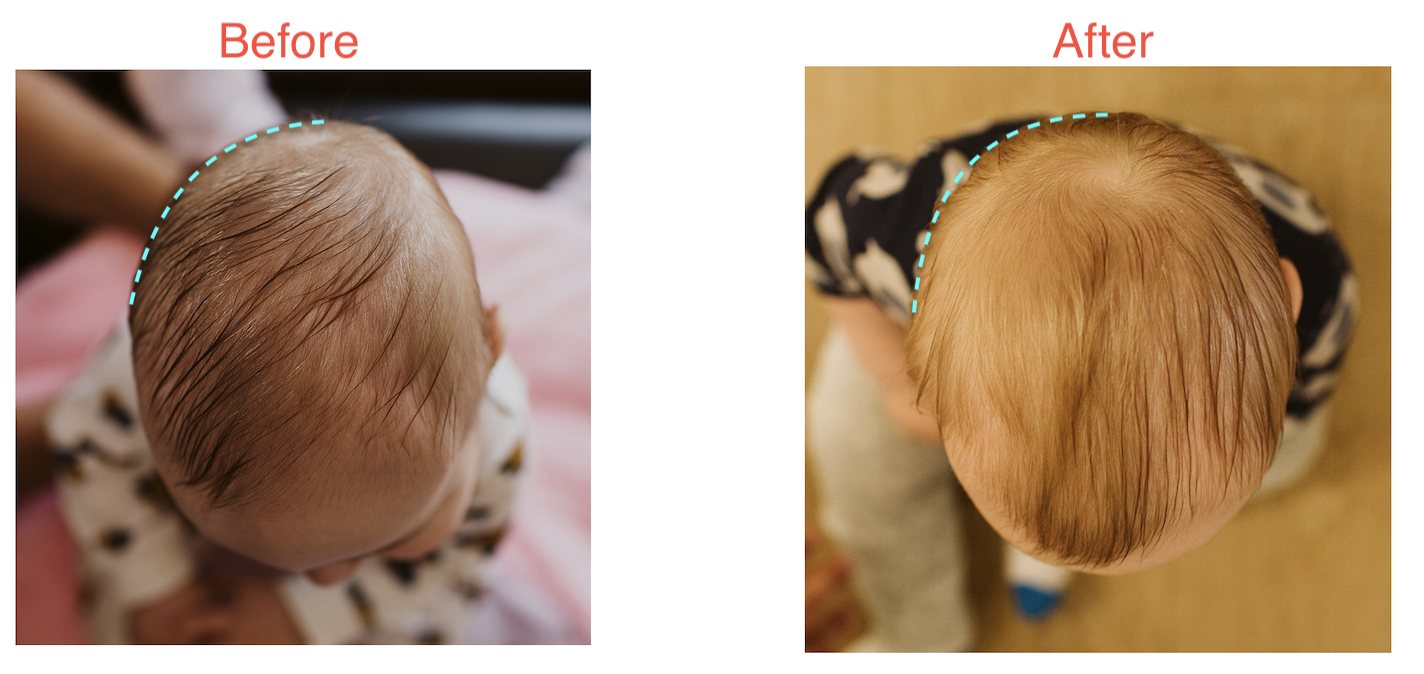
A slight flattening on the back of a baby's head—medically termed plagiocephaly—is common. However, as your baby grows, it's important to monitor this to ensure it doesn't progress into a more severe issue requiring intervention.
Here are four visual cues to look for that indicate your baby's flat spot might need professional attention.
1. Is Their Head Getting Flat at All?
The earliest sign of plagiocephaly is the appearance of a flat spot, typically on one of the back corners of the skull. This initial flattening is often mild and is considered the first stage. I see this overdiagnosed by pediatricians very frequently. Don’t get too stressed at this stage just yet!
2. Check the Position of Their Ears
As the flatness progresses, the head shape changes can affect the alignment of other facial features.
What to Look For:
Look down at your baby's head from a bird's-eye view.
The ears on both sides should be perfectly level and symmetrical.
If one ear is starting to shift forward compared to the other, this is a clear sign that the plagiocephaly is advancing and is considered the second stage of severity.
3. Look for Forehead Bulging
Advanced plagiocephaly can manifest in the forehead as the skull attempts to compensate for the pressure and flattening in the back.
What to Look For:
On the same side as the flat spot on the back of the head, the forehead can start to bulge or push forward.
If you notice an asymmetrical bulge in their forehead when viewing their face straight-on, it suggests the condition is starting to advance.
4. Check for Unlevel Eyes
The most advanced signs of plagiocephaly involve the eyes, indicating a significant distortion in the cranial structure.
What to Look For:
Ideally, your baby's eyes should be perfectly level and even when looking straight at them.
If plagiocephaly advances too far, the eye on the affected side may start to drop down and appear unlevel with the other eye.
Unlevel eyes are a strong sign that the condition is at a more advanced stage and definitely requires professional intervention.
When to Seek Help
While a small, isolated flat spot is often manageable with simple repositioning techniques (tummy time, alternating feeding positions), progression to the stages below is a strong indicator that you should seek professional help:
Early
Flat spot on one side of the back of the head. Monitor closely with repositioning.
Stage 2
Ears becoming unlevel (one shifting forward). Needs professional evaluation.
Stage 3
Forehead starting to bulge forward. Needs professional evaluation.
Advanced
Eyes becoming unlevel (one dropping down). Requires immediate professional intervention.
The Role of Pediatric Chiropractors
Pediatric chiropractors are trained to evaluate cranial symmetry and movement. Gentle cranial adjustments can often help ensure the cranial bones are moving correctly, potentially helping the head naturally round out over time. They should be the absolute first person you call if you notice your baby’s head is becoming flat. There is no other profession that is better suited to evaluate and help your child with a flat head.
Seeking an evaluation early may help avoid more invasive or resource-intensive measures like helmet therapy, which can be expensive, time-consuming, and places severe stress on your baby’s developing spine and nervous system.
If you are concerned about your baby’s head, reach out to our office for an evaluation!